


Por fin se encuentra disponible el capítulo 18 de Transmission, Inheritance, Emulation del Profesor Goldsbury.
Como siempre, leemos, aprendemos y esperamos al siguiente!
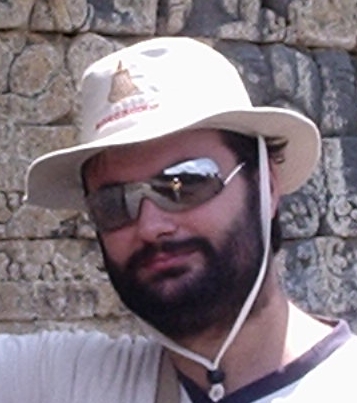 Alejandro Villanueva (Flintstone)
In my (little) free time, I enjoy spending time with my little family, reading all kind of literature and chatting with friends in front of a coffee. Also traveling and knowing other people's cultures is a big interest of mine. After working for five years as a Project/Site Manager in Pulp & Paper companies, and playing with IT for a big while, I'm moving to manage a startup in Gas Technologies... Read More


 visitors up to date.


 Posts
All Comments
Posts
All Comments

Por fin se encuentra disponible el capítulo 18 de Transmission, Inheritance, Emulation del Profesor Goldsbury.
Como siempre, leemos, aprendemos y esperamos al siguiente!
Just published in Aikiweb, the second installment of the Hiden Diaries of Morihei Ueshiba. You cannot miss this one!
Third Auspicious Day of the Sixth Moon
4.30
Got up and went up to the roof to greet the Sun Goddess. She was still feeling sore about Susano O, her wayward brother, and at one point threatened to go back behind the Stone Door. Since we are still celebrating her original August Exit (recorded in her memoirs, which our non-Japanese students know as the Records of Ancient Matters) and are applying the lessons from this August Exit to our own training, as we constantly strive to keep the Three Worlds in harmony, I was—luckily—able to persuade her against taking this drastic step. I reminded her of what had happened the first time: all the myriad calamities that beset the Central Land of Reed Plains like swarms of flies in the fifth moon.
I saw it was obvious that Amaterasu needed to get tougher, so I told her about the men who walk into the jaws of tigers. When she asked why they would do such a dumb thing, I realized that she had no clue about IHTBF, so I put her straight about this. Heck, even the kami sometimes need to go back to basics and put their supposed abilities to the test! I think the Chinese call this tiger-jaw-walker training ‘internal', but I never heard Master Takeda use this term: he always used to talk about aiki. And the thing is, he never taught it to anybody. Anyway, this training is what sorts out the men from the boys, who find that all they can do is mew like housecats. I think people can guess which training leads to better results. I was concerned that she was losing the ability to discern: what is more useful and more martial in keeping the kami in their place, and there was a chance she could spend a few millennia chasing a dead end. So I suggested she do some serious tiger-jaw-walker training, learn to uproot a few heavenly trees and what-not, so that she could stand up to Susano-O with more backbone, sorry, more aiki. And, especially, learn the POWER of INTENT.
As well as toughening up, it was obvious that Amaterasu needed cheering up, so I informed her that the first installment of the diary that I decided to share with the world had gone down quite well, especially among our beloved American students. But there was some speculation down in the human world about the person I used as my messenger. I think people have to realize that the kami move in DEEPLY mysterious ways. I assured her that the person I used had no clue whatever about the deeper aspects of this unique mission: to assist the Aiki Avatar in the work of harmonizing the Three Worlds. I have learned by experience that humans actually spend a long time debating about the meaning of harmony—but to little avail. As well as doing tiger-jaw-walker training, they should really learn our wonderful native language and explore the full range of possibilities offered by the phrase Aiki is Aiki.
Only the other day, I chanced upon a discussion about the definition of aiki. People were disputing as usual. When will they ever learn? Of course, we Japanese have had our share of disputes. I still remember the dispute between Kisshomaru and Koichi T. Now that was a dispute worthy of the name. Talk about two queens in the same beehive...
As for aiki, what is the English phrase I have heard somewhere recently? Hidden in Plain Sight. Very well put. That reminds me of another phrase, used by some English writer named Shaw, I think, who was almost contemporary with me. What was it he said? Those who can, do; those who can't, teach. Absolutely. This phrase is very applicable to the martial arts and especially to my new budo.
I think that Aiki Avatar is a very good phrase and the initials AA are simply brilliant. For those who don't know much English, both begin with the first letter of the English alphabet, which is the primal sound AAHHH and has a very long history. Doesn't quite measure up to SUUU, though. It doesn't have any kokyu, which is what was lacking in the martial arts before Deguchi Sensei came along and taught us all to do chinkon kishin. Ah, I do miss Deguchi Sensei and his chinkon trances. The thing is, you never knew whether he was in a trance or not: it was all the same to him.
But I've heard that AA also has other meanings, mainly to do with automobiles and drinking too much alcohol… Not that this is a problem with many of our deshi. Only the other day I encountered a young deshi with a bandaged hand—I think he was one of Kisshomaru's deshi. I expected to be told that he had been testing the effectiveness of aikido techniques outside the dojo, as any deshi worth the name ought to do, but he looked down at his feet and said he had a fight with a door, on his way out of a bar. Resolved to tell Kisshomaru to warn his deshi to be more discreet about what they were up to outside the dojo. I am all for showing the effectiveness of my techniques—and, Heavens, I had a long enough dispute with Master Takeda about reducing the number and cutting out those that were ineffective in maintaining the proper balance with the Three Worlds, but the deshi should pay much more attention to the essential distinction between omote and ura and not fight battles they can't win. (That's a good phrase. Who first said that, I wonder? I think it was some Chinese general… Trust the Chinese to have thought of it first. However, we Japanese are noted for borrowing foreign ideas and greatly improving on them. I will use it in my discourses.)
In view of the recent movie about the blue people with long noses and tails, perhaps Aiki Avatar is a phrase best not used too often—perhaps only to the members of Deguchi Sensei's and Goi Sensei's groups. I am sure that both Deguchi Sensei and Goi Sensei will understand everything about avatars. Actually, Deguchi Sensei sometimes shocked people by using his Male Member exactly like a tail: perhaps he had already seen the movie in another life and had noted the contents. That would be typical of the unpredictable Deguchi Sensei: he always did everything ‘back to front', so to speak.
6.30
Took breakfast with She Who Must Be Obeyed. Enough said. In fact she didn't say anything, beyond telling me to get ready for another trip to Iwama. Of course, I retorted that I AM ALWAYS READY, but my words yet again appeared to fall on stony ground.
8.00
Encountered Kisshomaru and discussed demonstrations. I myself have no time for them, really, unless they are in front of His Imperial Majesty. For my assistants never manage to align their ukemi to illuminate fully the divine quality of my techniques. Yukawa was quite good and Tamura sometimes came close, but Kisshomaru always tells me that we have to keep up with the times and I gather my grandson Moriteru thinks the same way. I understand that they now do a big demonstration once a year just down the road from His Imperial Majesty's palace. The place is opposite the Yasukuni Shrine, where the souls of many of our dear wartime students are enshrined. One year I took a short break from my work up here on the Floating Bridge of Heaven and had a peep at the demonstration. I was quite stunned and asked myself: What on earth is going on? WHAT HAS HAPPENED TO MY AIKIDO? Actually, I once found myself shouting this in the dojo and everyone was cowering at the edges of the mat avoiding eye contact. All except Kisshomaru, who sat there wiping his nose on his sleeve. I must talk to his mother about this.
10.00
Set out for Iwama. Arrived at Ueno Station without incident, but had an urgent message from Deguchi Sensei advising me not to take the first train. Thinking the advice was probably connected with Amaterasu and the Stone Door, I quickly left the train and returned to the platform, using a special technique that Master Takeda perfected. I think our non-Japanese students call this ‘moving without being seen' and, needless to say, it worked very well with my deshi, whom I found later, wandering up and down the platform in a panic. I came up silently behind him and gently bopped him on the head. "Aaagghhh," he said. "I didn't see you." "Absolutely." I responded, with just the right combination of gentleness and severity necessary for an effective pedagogical encounter.
16.00
Went outside to the shrine before practice and encountered a statue—of myself. Where on earth had this come from? Summoned Isoyama for an explanation. I know that after Saito's passing things had changed, but another statue, especially this one, with my beard perfectly trimmed and skirt perfectly pleated, was not at all what I expected. Of course, She Who Must Be Obeyed would like it, but I think it makes me look too much like that dictator in Russia, or is it North Korea? He has more hair than I have, but it seems artificial and it is obvious he's never done a day of serious training in his whole life.
Had another long discussion with Amaterasu, who had been doing some very serious tiger-jaw-walker training and felt much better, but she still had problems with INTENT. She couldn't direct it where she wanted to. Of course, she has to give it time and put in the mileage. She was very concerned about her offspring (and my favorite deity) Masakatsu Agatsu. She thought he might fall into Susano O's clutches. Actually, she told me off for shortening his name and emphasized that his name was Masakatsu Agatsu Katsu Hayabi Ame no Oshi Ho Mimi no Mikoto. She thought the rest of his name would be forgotten. Well, it was obvious I had to put her right about this. For a start, his name was a mouthful and even remembering it would be way beyond the mental resources of our dear American students. And that was just the pronunciation. As for the meaning, we all know that our august national language is far better equipped to exploit the rich resources of such a fine name, but what to do with the dull English version: ‘True Victory My Victory Heavenly Deity Ruling the Rice Ears'? I learned a lot from our foreign deshi, especially the Big American. He taught me about slogans and sound bites, for he used to use them all the time. So I laid it on the line. "Amaterasu," I said, dropping the formal bits and speaking frankly, kami to kami, "You need to get clear about my students, especially the ones who walk into the jaws of tigers. True Victory My Victory Heavenly Deity Ruling the Rice Ears doesn't DO anything, but True Victory is Self Victory, which is how the professor who wears flowery skirts and chants kotodama translates it? Well, it GRABS people. It shows their INTENT. It makes them feel part of the team." (Who said that, I wonder? I think it was a rather nasty man who used to club people over the head with a baseball bat during dinner. He should have used one of my favorite weapons: nothing to match a spear or bayonet. Of course, these wouldn't work in confined spaces like dinner tables. But this is where you need oshi-uchi. No, that doesn't sound right. Oki-uchi, okichi-uchi, okoshi-uchi… Damn these English spelling rules! ...)
20.00
My, it's tough being an AA. As somebody else once said, "I need a vacation." Strangely enough, I believe he was an avatar as well: at least, he behaved like one. But he, or perhaps ‘it', was a much lower-level, mechanical, sort. I believe they opened him up and all they found were a few nuts and bolts and something called a CPU. I don't know what they thought this thing was, but to me CPU is obvious: it means Central Peripheral Unity, or, the Three Worlds in constant harmony.
Hoy nos toca un interesante artículo de Ethan Weisgard referente a la falsa creencia de que "no hay ataque en Aikido porque lo ha dicho O Sensei". Ya es un poco antiguo pero mantiene total actualidad. Quizá cada día más.
These three terms refer to the different kinds of timing used in dealing with an attacker in budo training. At one of the aikido summer camps in Denmark, Ulf Evenås and I once asked Saito Sensei about these terms. He said that they were used in iaido or kenjutsu training. I have never heard Saito Sensei use these terms himself when referring to the timing of the response to an attack in aikido. I believe his attitude towards the use of these terms came from O-Sensei. In an article from Aikido Journal there is an interview with O-Sensei from 1957. The following is an excerpt that pertains to this subject:O Sensei: In Aikido, there is absolutely no attack. To attack means that the spirit has already lost. We adhere to the principle of absolute nonresistance, that is to say, we do not oppose the attacker. Thus, there is no opponent in Aikido. The victory in Aikido is masakatsu and agatsu; since you win over everything in accordance with the mission of heaven, you possess absolute strength.
B: Does that mean ou no sen? (also called go no sen; this term refers to a defensive response to an attack.)
O Sensei: Absolutely not. It is not a question of either sensen no sen or sen no sen. If I were to try to verbalize it I would say that you control your opponent without trying to control him. That is, the state of continuous victory. There isn't any question of winning over or losing to an opponent. In this sense, there is no opponent in Aikido. Even if you have an opponent, he becomes a part of you, a partner you control only.
In O-Sensei’s first statement of the excerpt he says there is no attack. I believe that he is referring to a combative situation as I will describe in full later on in this article: the attacker has already chosen his role. His intention to attack is clear. What also must be taken into account is the fact that O-Sensei possessed such a high level of perception that he surpassed this kind of concept of timing completely. O-Sensei also refers to two important terms: masakatsu (correct victory) and agatsu (self-victory). This is a reference to one of his favorite sayings: “masakatsu, agatsu, katsu hayabi” (correct victory, self-victory, the day of swift victory). This is often interpreted to mean that correct victory is winning over your own self or ego. When reaching this state of selflessness, then this is the way to swift victory (not only in martial contexts but also in life itself).
O-Sensei goes on to say that it is not a question of sensen no sen or sen no sen. As stated earlier, O-Sensei was on a much higher level of perception than the concepts these terms indicate. But for those of us who follow the path of aiki without possessing the martial genius of the founder of aikido, I hope that my examples of these terms can be of some help in understanding the intricacies of timing and awareness inherent in the fascinating world of aikido. The Japanese character for ”sen” can also be read as “saki.” It means “before” and even sometimes “after” in certain contexts! But in the terms go no sen, sen no sen and sensen no sen, it is an abbreviation of sorts for the word “sente” meaning initiative or lead. The “te” in sente means hand, so sente directly translates as “before hand.” In budo, sente refers to an attack or the initiative to attack. In karate there is a saying: “karate niwa, sente wa nashi.” This means “in karate, there are no attacks.” This is a fine example of the defensive attitude found in traditional karate. This defensive attitude is inherent in traditional budo in general. There are, however, ways of taking control in a combative situation and leading the opponent’s “ki” or intention, without having to wait for the attacker to start the attack.
When facing an opponent in a combative situation, the conditions are already set: you are facing a person intent on fighting you. The case should be, if you have behaved according to proper etiquette, that you have given the attacker no reason to fight you, and you have attempted to resolve the impending confrontation by all means possible, to the extent of removing yourself from the presence of the attacker. When all else fails, then it is time to defend yourself. This is the presupposed basis of the situation that we are in when we face our opponent during budo practice. Therefore it is morally justifiable to, if necessary, use a technique that draws forth an attack from your opponent, hereby creating a possibility to counter the opponent’s attack: sensen no sen. To start from the beginning, let us look at go no sen. Go means “after.” Go no sen is the timing that is often used in budo when responding to an attack. In aikido, an example would be stepping to the inside of the line of attack, parrying the attacking hand and executing shihonage when defending against yokomen uchi. In aiki-ken it could be exemplified by migi awase, with uke tachi stepping off the line of attack to the right and counterstriking with shomen uchi. In migi awase, we move in harmony with the attacker, but it is the attacker that is taking the initiative in the attack and we are mirroring his or her movements.
Sen no sen means before the attack. Sometimes this timing is also called mae no sen, mae also meaning before. Sen no sen implies that, for example in weapons practice, uke is aware of uchi’s intention of attacking and right at the time when uchi is starting to attack, steps in and stops the attack. This could be exemplified in aiki-ken by the movement in which uke tachi steps directly in with tsuki at the moment when uchi tachi lifts his sword up to strike shomen uchi. This movement can be seen beautifully executed by O-Sensei in many of the old films. In aiki-jo, the movement in kumi jo number eight is a good example of sen no sen: uchi is standing in tsuki no kamae, as is uke. Uchi does hayagaeshi, intending to attack with yokomen uchi. As uchi steps forward while lifting the jo up and around in jodan gaeshi uchi, uke slide-steps straight in under uchi’s jo, thrusting directly forward at uchi. In tai jutsu, the outward parry used against yokomen uchi is a good example of sen no sen: as uke lifts his hand up over his head and starts to swing his handblade forward in yokomen uchi, nage slide-steps forward to the outside and stops uke’s hand before it gains too much momentum.
Sensen no sen is an even more refined concept in regards to timing. The term consists of a repetition of the term sen. So this refers to the timing before sen no sen. It is the case of initiating a movement intended to lead the attacker’s spirit as well as to draw forth an actual attack, in order to utilize this attack for a defensive technique. Saito Sensei often said: “aite no ki wo yobidasu,” to call out the ki of your opponent. Some people may think that this goes against the attitude of never attacking in aikido. In this case, one must recognize the training situation, as well as an actual selfdefense situation, for what it is: all attempts to defuse the conflict have been tried to no avail, and therefore we are faced with an impending attack from our opponent. The opponent has already decided to attack, the intention is there, and the actual physical attack is impending. In this case, we are not attacking an innocent individual, we are responding to a situation that is clearly a threat to our safety. It is therefore morally justifiable to call out the attack of your opponent. You are making him commit the attack that he already has intended to execute, but you are controlling the circumstances of the situation by leading him.
A good example of sensen no sen in tai jutsu is shomen-uchi. Saito Sensei often referred to O- Sensei’s book, entitled “Budo,” in the case of performing correct shomen-uchi. O-Sensei clearly stated that nage should initiate the movement by striking toward uke’s face with the handblade, bringing the hand from the starting position at about waist-height and upward towards uke’s face. Uke blocks this movement, hereby enabling nage to utilize uke’s blocking arm for a given technique. This movement has all but disappeared from most aikido schools. I believe this is due to a misunderstanding of the principle of sensen no sen; the belief that nage’s initiating movement would be considered an attack, thereby going against the defensive principles of aikido. The lack of understanding of this point has resulted, in many aikido schools, with uke attacking with a downward-moving shomen-uchi, and nage blocking this attack. This results in the breaking of an important basic principle of aikido: never to go directly against the force of your opponent’s attack once it is fully set in motion. Saito Sensei often made the point that when defending against a downward-moving shomen-uchi, nage should move off the line of attack and never attempt to block this strike. This results in certain techniques being applicable, for instance irimi nage or kote gaeshi to the outside, or shihonage or kokyu nage to the inside, and others not, for example ikkyo and other techniques based on the same initial movement.
In aiki-ken, sensen no sen can be exemplified in the maki otoshi movement found in san no tachi (third kumi tachi). In the initial movement, uke tachi sweeps uchi tachi’s sword away with maki otoshi, and uchi tachi uses the momentum of the sweeping movement to continue into a yokomen attack. The maki otoshi sweeping movement is also intended to create an opening for uke tachi to strike uchi tachi’s wrist, but this movement can also be seen as a means to draw forth uchi tachi’s initial yokomen attack, hereby enabling uke tachi to parry, and finally to counterstrike in the second yokomen attack from uchi tachi.
Another very good example of sensen no sen in tai jutsu, this time on an even more advanced level than in the basic shomen uchi techniques, is the technique that carries the beautiful name “yamabiko no michi,” meaning “path of a mountain echo.” The name of the technique alludes to the initiating hand movement of nage resembling the voice being projected outwards, and uke’s reaction being the echo. This is an irimi nage technique calling for nage to start by dynamically initiating shomen uchi toward uke and, before making contact with uke’s parrying hand, flowing into tai sabaki to uke’s side. This tai sabaki to uke’s side leads directly into a body turn together with the movement of nage’s arm projecting towards uke’s face for the irimi nage throw. When done dynamically, with full ki, nage can throw uke without making physical contact at all during the execution of the technique.
There are other fine examples of aikido techniques that fit with these three concepts of timing. I recommend readers to try to find them in their training. And although we will never reach the martial genius of founder O-Sensei Morihei Ueshiba, I believe we should study his words and beliefs, and not let these three terms be the limits of our attempts to follow in his footsteps. We should consider them as a means to help us understand the intricacies of perception in budo practice, and strive for even higher levels than these terms represent.
Yours in Aiki,
Ethan Monnot Weisgard, dojo-cho
Copenhagen Aiki Shuren Dojo
Rescatando un viejo tema de aikidojournal.com a colación de qué es Aikido y qué no lo es. Se trata de una anécdota ocurrida al Maestro Minoru Mochizuki concerniente al escepticismo de un joven Tadashi Abe. Enjoy:
Había un hombre llamado Tadashi Abe, recientemente fallecido. En cierta ocasión en que visité a O Sensei en al dojo de Iwama para saludarle tras mi regreso a Japón al finalizar la guerra [WWII], tuve el siguiente encuentro con él. O Sensei se encontraba feliz al saber que yo había regresado sano y salvo y me dio una calurosa bienvenida. Me quedé a dormir esa noche en el dojo. Esa noche vino a mi habitación un hombre de aspecto malvado con un corte de pelo a lo monje y me pidió permiso para entrar. Cuando le di el permiso él entró.
Minoru Mochizuki, 10º Dan—“Me llamo Tadashi Abe. Sensei, ¿puedo hacerle una pregunta directa?”
Le dije que me preguntara lo que quisiera. Me preguntó si realmente estudiaba Aikijujutsu de manera seria. En aquellos tiempos el arte aun no tenía el nombre de Aikido. Cuando le respondí afirmativamente, me dijo lo siguiente:
—“¿En serio? Llevo mucho tiempo oyendo cosas sobre Vd., Sensei. He oído que ha tenido experiencia real en combate. Me parece extraño que alguien como Vd. Se encuentre satisfecho con un arte como el Aikijujutsu”.
Tadashi Abe, 6º DanCuando le pregunté por qué pensaba así me contestó que ni Ueshiba Sensei ni el Sr. Morihiro Saito serían capaces de resistir un combate contra él ni siquiera tres minutos. Que él les derrotaría de un solo golpe.
—“Estás muy seguro de ti mismo, ¿no?”, contesté. “¿De verdad crees que puedes derrotar a Ueshiba Sensei?”, añadí.
Contestó que creía que sería fácil para él derrotar a Sensei y aun añadió:
—“He estado observando a Ueshiba Sensei durante mucho tiempo y no me convence practicar un arte como el Aikijujutsu. Estoy seguro de que le puedo derrotar con solo un golpe de boxeo. He oído que Vd. pone énfasis en el combate, ¿es cierto?”
Le contesté como sigue:
—“He estado en muchas peleas callejeras, pero no incluiría eso en la categoría de ‘combate’. Y también he asaltado campamentos enemigos sable en mano”.
Entonces me preguntó si realmente el Aikido era útil o no para pelear. Cuando yo le respondí que el Aikido no sólo era útil en peleas sino también en tiempos de guerra me dijo que mi respuesta no le convencía. Entonces le sugerí que me atacara y me quedé allí, indicándole que me atacara como mejor supiera. Me pidió que me pusiera en guardia. Le contesté:
—“No pidas cosas innecesarias. No hay manera de derrotar al enemigo si él le dice lo qué hacer. ¡Atácame como quieras!”
Abe murmuró: “Sensei, ¿realmente puedo golpearle? Es extraño… tiene aperturas por todas partes…” Entonces se puso en guardia y me atacó de repente. Esquivé el golpe [taisabaki] y le di una patada. Gruñó y cayó al suelo. Inmediatamente apliqué una técnica de resucitación [katsu] y le di un masaje.
—“¿Cómo puede alguien como tú, que se desmorona y pierde el conocimiento cuando recibe una pequeña patada, durar algo en una pelea?”
—“Sensei, ¿es que el Aikido incluye técnicas de pateo?”
—“¡Estúpido! ¿Qué quieres decir con esa pregunta? Empleamos técnicas de pateo o lo que haga falta. Incluso he empleado artillería. Las artes marciales, las armas y la artillería, todas son Aikido. ¿Qué es lo que crees que es el Aikido? ¿Crees que se trata de retorcer muñecas? Es un medio de Guerra… ¡una acción de Guerra! El Aikido es una lucha con sables de verdad. Empleamos la palabra ‘Aiki’ porque con él podemos sentir la mente del enemigo que viene a atacar, de manera que podemos responder de manera inmediata. Mira el Sumo. Cuando dan la voz [Miatte! Miatte!] se levantan y se lanzan el uno contra el otro en un flash. Eso mismo es ‘Aiki’. Cuando una persona se enfrenta a un enemigo estando en un estado mental libre de toda idea o pensamiento y es instantáneamente capaz de lidiar con él, a eso lo llamamos ‘Aiki’. En los tiempos antiguos se llamaba ‘Aiki no jutsu’. Así, la artillería o cualquier cosa de convierte en ‘Aiki’”.
—“¿Así es…? Creo que ya entiendo”.
—“Si aun no lo entiendes, ven a verme cuando quieras”.
Después de este episodio Abe me tomó miedo y me saludaba desde lejos. Pero cuando fui enviado [por Ueshiba O Sensei] a Europa me pidió que le llevara como asistente.
Durante mi tiempo en Europa también tuve experiencias interesantes. Como practicábamos cosas como luxaciones de muñeca algunas personas se preguntaban si este tipo de entrenamiento realmente sería útil en una lucha real y me hacían muchas preguntas, así que les di la siguiente explicación:
—“Cuando practicamos, aprendemos la manera correcta de mover el cuerpo y cómo emplear la fuerza [kokyu ryoku] de manera racional. Mediante el uso del ‘Aiki’ puedes ser capaz de responder inmediatamente en cuando un enemigo se acerca acechando para atacar. De esta manera puedes sacudirte de encima a cualquiera”.
Así que un estudiante me preguntó: “¿Entonces puedo traer una pistola? Si empleo una pistola, Sensei, ¿qué haría Vd.?”
Mi respuesta fue que entonces yo traería un rifle.
George S. Ledyard writes in Aikiweb the following while discussing whether there is any offensive move in Aikido or not. I'm absolutely with him on this one.
Every response you execute when grabbed can be done when grabbing. Every atemi you execute when attacked can be used when attacking. We need to lose this whole uke / nage dichotomy. We also need to stop attaching pseudo moralistic value judgments to things like who initiates.
Peace is something you carry inside you. It's not something that has to do with who moves first. It is an attitude.
The misunderstanding of what the attacks really are that we routinely do in our daily training causes us to attach all sorts of baggage to the whole uke / nage relationship which shouldn't be there. This is caused by allowing two different mindsets and two different physical skill sets on the part of uke and nage. Nage is supposed to be relaxed and "defensive" in attitude, executing techniques of great technical sophistication while Uke attacks like an idiot, typically either is too tense or fails to really connect effectively. What would an attack look like if the uke knew what the nage knew?
If Aikido training was about BOTH partners having the same access to "aiki" skill sets we wouldn't have the need for discussions like this because people would understand what they are really doing, or choosing not to do, depending on the level of practice. A katatetori would break nage's balance instantly on contact and set up the atemi with the off hand. No one would be under the misconception that an attack has anything to do with not allowing the nage to move but rather to compromise his structure and make it impossible for nage to defend against the atemi.
We need to get way past trying to impute some sort of moral, right and wrong value judgment to the term "aiki". "Aiki" can be used for good or evil. That's why O-Sensei felt it was important not to teach technique to people not of good character.
I spent a number of years teaching law enforcement and security personnel. LE officers are required to initiate technique on subjects who are e-gressive, not just a-ggressive. I can assure you that "aiki" works just as well when the person initiates as when he is being attacked. Virtually every technique in the Aikido repertoire can be used as an attack, not just a defense. The circumstance and ones personal mindset determine whether this is "violent" in an immoral way or not.
Found this today in the aikiweb and thought it was so irreverent and hilarious I would rather share it here for you. Enjoy!
April 1
4.30
Got up and went up to the roof to greet the Sun Goddess. Of course, our conversation took place by means of the jo. I fail to understand why Kisshomaru does not make more use of this wonderful instrument. After all, I used it often enough.
Had a lengthy discussion with Amaterasu about her grandson Masakatsu Agatsu. I told her that he was my favourite deity, along with her brother Susano O, but this did NOT go down very well AT ALL. She told me that she is still having severe problems with Susano O and these problems were affecting the entire universe. They are also interfering with my own work as the main Avatar between the Three Realms. Here am I, standing on the Floating Bridge of Heaven and constantly training to ensure that Aiki is Aiki (I am glad the Japanese language is so rich in resources; it is completely different from dull, boring English), but the continuing problems with Amaterasu and her brother are making things very, very difficult.
So I reassured her with the remark that the whole problem lay in the English translation. English simply does not have the resources to capture the full range of meaning encapsulated (spelling correct?) in the phrase Aiki is Aiki. I gather that all my discourses are being translated into English by some Buddhist professor who lives in the north of Japan. (I know about him because he sometimes wears flowery hakama and does kotodama chants in English churches: at least this is a welcome change from the deadly boring chants I hear in Japan.) I explained that the professor had translated the name Masakatsu Agatsu as Victory OVER Oneself, not Victory BY Oneself, which is MUCH more meaningful than anything about winning and losing, especially to our dear American students.
By the way, I gather that a film has come out with the name Avatar. When I first heard about it, I was very happy and hoped that it would take account of my work on the Floating Bridge of Heaven, uniting the Three Worlds, but the movie was a TOTAL disappointment. The love interest was COMPLETELY wrong and involved silly relationships with strange people in blue, with long noses and wearing tails. If people start wearing tails for aikido training, we are going to have to redesign the whole range of keikogi, especially the pants and hakama.
So I told my grandson Moriteru to deal with this, but however, he seemed TOTALLY unconcerned. "Ojii-chan," he said, "if people come to the Hombu Dojo wearing tails, be assured that we will deal with the situation very effectively. We are now a very efficient, smoothly-running organization." I was unconvinced, for I read somewhere that the folds in the hakama represented seven virtues; but we are now going to have to add an eighth virtue, for the correctly folded tail. What IS the world coming to? Anyway, I have not seen anyone wearing tails during training so far, but I must consult with Deguchi Sensei. He might have encountered some Blue Avatars during his later trips through the Spirit World. Deguchi Sensei is a constant source of inspiration, much like Goi Sensei, though the spiritual methods of the two are completely different. Deguchi Sensei is very refreshing, constantly regaling me with reports of visits to the spirit world and his activities with the spirits, though his use of the Male Member makes one blush. Goi Sensei, on the other hand, is rather more pedestrian, though he agrees with me much more often. However, all he seems to do is put up prayer signs everywhere wishing for peace on earth. Of course, this is all very worthy, but I don't like to tell him that my own work on the Floating Bridge of Heaven, working to unite the Three Realms, fully in tune with with Aiki as Aiki, is MUCH more effective than prayer signs. But only time will tell.
6.30
Went downstairs and prepared for practice. Decided to explain in more detail about the kotodama sound SU and how it created the universe. BUT EVERYTHING fell on TOTALLY stony ground (Now where have I heard this phrase before? Note to self: this is a very good phrase, totally appropriate for the current crop of uchi-deshi: I must start using it very often). Everybody just sat there looking stupid. They were probably hoping I'd stop talking and do some techniques. I am sure you can see the picture: people look at you intently and nod vigorously, hoping you will think they understand, as they shift their knees slightly from sitting in seiza for a long time. But when I finally summoned the Big American to take ukemi (I think his name is Dogson, Dodgson, Dobson, Fogson, Edison, or something like that: I prefer to call him Teru), he was far too powerful and got the timing, everything, completely wrong. Heavens, he couldn't even do the boat rowing exercise correctly and he should know by now that this is absolutely crucial for summoning the right kami for the training. When will these uchideshi ever learn?
Was still feeling grumpy after keiko, only to discover that the uchideshi on duty had not filled the morning bath water correctly. He had checked the temperature by putting his hand in the water, causing total contamination. They should know by now that bath water—any kind of water, has to be pristinely pure. Otherwise it is entirely useless for misogi. I keep on talking about this during keiko, but the uchideshi simply do not seem to get it. Only the other day, one of the deshi appeared in his underwear, for Heaven's sake. I think it was Saotome. So I sent him off the mat very promptly and made him sit in seiza and watch.
9.00
Felt much better after breakfast, which was duly prepared by She Who Must Be Obeyed, though she tore a strip off me for having to stitch my hakama, because some silly uke had torn it. She blamed me for not controlling my uke correctly, rather than the uke for not falling properly. (Obviously she knows rather more about aikido than I had realized.) During breakfast my wayward son was muttering something about doing some kind of public demonstration. It is so unfortunate that he failed the medical exams for the military. A spell in the Japanese Army, or even the new Occupation Forces (I think they are called Marines and from the look of some of the soldiers they appear to accept foreigners) would have given him some much-needed backbone.
10.00-12.00
Had another long conversation with Amaterasu and decided to go to Iwama, to talk in more detail with Susano O. Announced this to She Who Must Be Obeyed and there was a major panic. I have no idea why. She muttered something about train times, but I assured her that I ALWAYS arrive at the station at least one hour before the train departs, so there was no need to worry. Was assigned the deshi who killed the dog (I think his name is Chiba), but was told that my son Kisshomaru would also accompany me. I gather he wanted to discuss something very important.
16.00
I MISSED THE TRAIN TO IWAMA. This has NEVER happened before. I arrived at the station one hour before the train was due to depart, but discovered that I was five minutes late: the train had already departed. And Kisshomaru and the deshi were nowhere to be found. I was so annoyed. However, Deguchi told me to be patient. He had consulted with some of his own deity friends and assured me that it was my destiny to arrive in Iwama today.
18.00
Finally arrived in Iwama and took a welcome bath. The water was fine. Kisshomaru, who had taken the right train, was there to meet me with Saito Father and Son. Went to the shrine and discussed current issues with Susano O involving the Three Worlds. Explained about Amaterasu's problem, but I was quite astonished when he suggested I see the new Avatar film again—and he seemed quite unfazed about the strange noses and the tails. Told me that aikido had to be fully in tune with ecology, whatever this is.
20.00
Had a painful discussion with Kisshomaru after keiko. Apparently he has decided that aikido has to be popular, now the war has ended, and so wants to hold a public demonstration. When I retorted that one only does demonstrations in the presence of His Majesty, or on anniversaries of His Majesty, he held his ground and told me that he had the idea in August, 1945, when His Majesty announced Japan's surrender. Kisshomaru clearly has more backbone then I previously thought; obviously, he has been talking to his mother. I was rather shocked when he told me that the venue would be the ROOF of a department store, but he backed this up with an argument that many people would attend if it was held there and, anyway, aikido had to become relevant to the lives of common people, not aristocrats. Of course, he said he understood the sterling work I had been doing keeping the Three Worlds together, but stressed that his own work was firmly down here. He was quite firm about this and his second argument was that the Tokyo dojo had to be torn down and replaced with something much bigger and more fitting for aikido as a worldwide budo. Can't argue with that, though I shall miss the old wooden dojo. I told him to leave Iwama as it is, though. In any case Saito is still here and he is quite capable of standing up to Kisshomaru.
Anyway, it was morning when I woke up. Must have nodded off as Chiba was reading Reikai Monogatari last night. Got up and went outside to greet the Sun Goddess and hear the latest about Susano O…
Poema de los principios secretos. Encontrado en los pergaminos de Kukishin Ryû.
“No existe un pueblo en que la luz de la luna no brille,
pero en la mente del que mira parece que existe.
Los ligeros brillos de la luna caen sobre cada cosa.
Si sientes que no está brillando donde tu te encuentras,
es porque la mente del que está mirando está nublada.
Incluso la tierra lavada durante un diluvio,
dejándose llevar,
flotará en cualquier torrente.
Incluso la suciedad lavada llevada por un diluvio
flotará naturalmente en la superficie del agua.
Esto significa que aún cuando estás en una situación de desesperación,
si tu estado de ánimo es como el Sutemi,
proyectándote a lo lejos,
podrás encontrar una manera de vencer.
En todas las defensas que el cuerpo usa para mostrar valor,
el verdadero secreto es la mente.
Las posiciones del cuerpo parecen expresar la fuerza de cada uno
pero la verdadera fuerza está en el corazón.
¿No es el secreto o el poder hacer uso de la fuerza del enemigo, el corazón de un sauce en el viento?
Lo que es importante del camino marcial
es omitir el exceso de poder y usar la fuerza del oponente,
haciendo exactamente como las ramas del sauce
cuando son sopladas por el viento y oscilan sin tensión”
The always recurring theme of Aikiken has given one of the most complete advice in an internet forum in AikiWeb.
Quoted here:
I tried very hard to avoid any implication of superiority of anything. I practice Aikiken myself, usually daily as a break from my work. I do, however, also believe that some questions give the appearance of being easily answerable while hiding a myriad of vastly more complex questions that are not being asked. This is was one of those for me. In my training there have been many times when I've asked the same question only to be told to keep practicing. Over time you begin to realize that the question asked was not really answerable as there were 1000 things unasked, each arguably more important than the one asked. Or maybe a better analogy for me is the solving of a rubic's cube. People will get one surface correct and then ask what to do next. They don't want to hear that they have to destroy everything they've accomplished to "fix" the whole thing.
The cut doesn't exist in isolation.
A person with an incorrect grip will pull their elbows out to the side causing them to not get correctly "behind" the tsuka. This makes it very difficult to get a straight cut. Fix the grip.
A person with a correct grip can still push out their elbows. With the elbows out the person cannot get behind the tsuka correctly during the cut. Keep the elbows in correctly.
A person with a correct grip and elbows in will often push the sword too far forward, basically pushing their shoulders out of proper alignment. As the arms come down the realignment of the shoulders being out of phase can cause wobble. Keep the shoulders correctly in place throughout the arc of the cut.
A person with incorrect alignment of the hips to their shoulders (hence to the target) will often find themselves rotating slightly during the cut causing the shoulders to come out of alignment. Fix the body alignment.
A person with poor posture will often have to compensate throughout the movement causing alignment issues.
Footwork is always an issue as too much movement in any one direction can cause the same issues of rotation within the body. Remember that power is generated from the one-point/hara/dantien/whatever and sent through the body. The sword cuts, you guide, and power is a result of the entire body. When that does not happen muscles have to compensate and it becomes extremely difficult to keep a consistent path to the sword.
Overextension in any part of the body tends to cause wobbles as balance is thrown off. Control, control, control.
Hand dominance is a constant issue. Often hints such as "focus on the left hand for power, right hand for guidance" are given to a person who needs that advice due to how they're swinging. The same advice to someone else will just make their cut worse. The reality is that the hands have to work together seamlessly with the entire body transmitting movement. So advice here usually has to be given very carefully depending on the person's needs.
For some a lighter sword will help fix issues, especially if they're throwing themselves off balance. Other times a heavier sword will make the difference for the exact same issues. Control is the underlying thing being addressed. Sometimes having a lighter sword allows the person to find the proper "groove" for cutting. Sometimes a heavier sword slows them down enough for them to find the proper "groove" for cutting. So YMMV.
Keep in mind that everything as described up above may be slightly different depending on what style you study. Some styles do bigger cuts, some smaller. Some slashing, some cleaving. Some are very fast with small movements, some are bigger, mean, cut them in half type things. Some emphasize being square (hips/shoulders) to the opponent, others not so much. Some emphasize foot alignment as well that is square, others not so much. Those changes alone will dramatically change how cuts are done. So each style will address most of the above issues slightly differently because each thing affects the other. The individual "tips" exist as part of a larger whole. What works with one will be absolutely wrong for another because internal consistency is what matters. Later styles of swordsmanship tended to emphasize draw/cut movements. Some earlier styles (some regional differences as well) will emphasize a slightly different grip which allows a more "leveraged" fast movement of the blade. Watch Toby Threadgill's demos on youtube with the sword. Compare how the sword moves with someone doing something like iai. Very different in subtle ways. Neither is incorrect. But each does what they do with an internal consistency that is critical to proper form.
In the end (after that long post) my point originally was that most advice regarding swordsmanship cries out for a larger context to ensure that the internal consistency is there. I do iai differently at times than I do my aikiken. Because they are different. And I've seen many aikiken demonstrations by high ranking people of many styles and there are more differences than similarities. Straightening out a cut depends on what you're doing wrong. What's "wrong" or "right" depends on who you study with and how they do things.
This is not an issue of superiority. I enjoy aikiken. I would not give advice to someone from another style, however, because I don't know what they might be doing wrong. Because I wouldn't know what is "right" in their style.
But yes, there are basic things. Smooth cut. Don't over muscle. Slow down. Get good extension without over-committing. For the rest? Ask your sensei to watch and fix what you're doing wrong.
Now I'm sure some think I'm being an elitist snob anyway (I get e-mail, yes, I get e-mail...) I don't think it is a highjack but an attempt to see the larger picture.
That said, please do not hesitate to put me in your ignore list. Or just scroll right past.
So please pardon the intrusion in your thread. I was trying to answer the OP's questions as sincerely as possible.
The author, Keith Larman, is a member of Seidokan Aikido as well as a sword expert and has published some very detailed articles on the matter.
Keith Larman became interested in Japanese sword crafts in the late 1970’s. In the 1990’s he began training in traditional methods of polishing and mounting of the Japanese sword. In 2002 he decided to devote himself full-time to the profession of polishing and mounting.

Nihon Kobudo Aragón organiza un stage de Kempo con Jeff Speakman el 10 de Abril en el Polideportivo San Agustín en Zaragoza.
Sin duda alguna será un gran curso y una oportunidad única de trabajar con un maestro de su nivel.
“I was uchideshi this year again for one month (tooooo short) and had the opportunity to learn Battojutsu directly from [Hitohiro Saito] Sensei. First, Sensei handed us the Iaito (the Tanrenkan has several) and told me, as the highest grade present, to practice suburi, and kumitachi. Since I did not know anything about it, I had to depend on Kasper (an excellent long time sotodeshi), and another day on Yasuhiro Saito, to teach me the Sekiguchi Ryu. About a week later, Sensei taught us directly with many details. It was a wonderful class. Sekiguchi Ryu is a ryu originally from Wakayama (O’Sensei’s country). It is a vigorous style with lots of kiai. We also practiced with live blades using some excellent swords that Sensei has.
One site where you can have a look at this Battojutsu style is bushinjuku.com.
It seems that Sensei has had a long connection with this style.”
Tristão da Cunha Sensei from Portugal.
Click here to view forum thread in Aikidojournal.
Just found this while surfing the web and thought it would be interesting to share.
[Source: Aikihut]
Recién llegado a mi dirección de correo electrónico:
Yo creo la Sociedad General de Fabricantes de Mesas.
Yo fabrico una mesa a Victor Manuel, él va, me la paga y se la lleva a su casa. Un día invita a comer a los corruptos de sus amigos para hacerse una cena con jabugo, ostras, caviar de Beluga y otras delicatessen propias de un currante como él.
Pues bueno, ¿cómo es que sus amigos están comiendo en MI mesa, disfrutando de ella Y NO ME ESTÁN PAGANDO?.
¿Que ya la pagó en su momento Victor Manuel y él hace lo que quiera con la mesa?. ¡De eso nada!.
Yo se la vendí a ÉL y no al gordo de Echanove que se está poniendo ciego comiendo en mi mesa.
Así que cada vez que alguien coma en una mesa y no sea éste el que la compró me tiene que pagar.
Pero espera, no solo eso, sino que al que saque beneficio económico de mi trabajo (la puta mesa), lo voy a sangrar.
Osea, todos los restaurantes que me paguen 2mil€ al mes por usar mis mesas. ¿Pero por qué restaurantes solo?, TODO EL MUNDO USA MESAS: las oficinas necesitan mesas para trabajar Y GANAN DINERO POR ELLO, los voy a sangrar a todos.
¿Una boda?, que paguen por las mesas, ¿NO PAGAN POR LOS LANGOSTINOS? (Victor Manuel dixit).
Pero claro, hay un problema: yo antes hacía mesas, pero hace años que no hago ni una y nadie usa una mesa mia. Pues no pasa nada, yo cobro por TODAS las mesas. Es más, por todo lo que tenga 4 patas y una tabla encima. Por si acaso, vete a saber si alguna de ellas es mia o de mis amigos de la Asosiación.
Pero da igual si esas mesas son de Ikea, YO las cobro y luego digo que el dinero se lo lleva Ikea.

One of the big problems people seem to have with Aikido is all the wrist grabbing. It seems silly and unnecessary if you come from a sport martial art school. If you’re into RBMA (reality based martial arts) then it seems only mildly useful, and only in self defense situations. Punching and kicking seem reasonable, headlocks, body to body clinching, these things are what martial arts should be about, right…
The biggest problem our martial art faces today, in terms of our ability to develop (as individuals and as a whole), is understanding what we are doing and why. There is so much confusion in our community as to what we are doing. Why do we practice such strange techniques? How does our system even work in a martial context?
Even if you are not interested in martial questions directly, this should be important to you. So you’ve never been in a fight, and don’t ever expect to be. You’re probably right, if you are a reasonable person, it’s unlikely that you will ever get into a fight. However even if you were never put in a position to “use” your martial arts training, this question is important to you. Not because of your ability to “use” Aikido outside of the dojo, but because of your ability to “use” Aikido inside of the dojo!
Para leer el artículo completo: aikidostudent.com

Mi vieja y buena amiga Toscahua se embarca junto con su socia María en la aventura de abrir una guerdería bilingüe en Utebo. Se estrenan este sábado con una jornada de puertas abiertas a la que no podéis faltar todos los nuevos padres que deseen una educación bilingüe y de calidad para los peques.
Más información en la web de la guardería Magic Forest en: www.guarderiamagicforest.es.

Ellis Amdur publica una nota en su memoria en: In Memory of Kuroiwa Yoshio.
Descanse en paz, Kuroiwa Sensei.
Tras dos meses de impaciente espera, ya tenemos el capítulo 17 de Transmission, Inheritance, Emulation del Profesor Goldsbury.
¡Ahora a leer y a disfrutar!
A judoka recovered an old ju-jutsu technique.
On May 16 in Poasco (Milan), during AISE ‘s grade exam, Giancarlo Manenti, 5th dan from Siena, showed during randori an old breakfalling ju-jutsu technique named “chugairi”.
At Bu-sen Milano we always practised it as space conquest exercise (see training film), with the recommendation to our judokas not to use it because it was a technique reserved to jiu-jutsu expert, that could cause accidents to less skilled judokas.
Giancarlo Manenti took the Shodan in Siena, studied 5 years at Bu-sen Milano. When he went back to his native town he put right chugairi in randori as counter-attack to o-soto-gari, and ending up with waki-gatame or kesa-gatame (see randori film).
Due to this brilliant achievement proved in randori, as person in charge for exams, I've taken the liberty to propose him for 6th dan, as the only judoka in AISE who has brought a study of (I believe) worldwide relevance on judo to a conclusion.
I add some details: “ukemi” means “break-fall” and comprises all techniques that allow uke to absorb a fall escaping tori's control. Saigo Shiro nicknamed “The Cat” was famous for this. Among these techniques: Chugairi, Dai-sharin and mae-ukemi.
With the spread of judo, these techniques were considered unsafe and abandoned, admitting in the Ukemi category only techniques which permit to absorb the ippon without damages to the body.
-- Cesare Barioli
[Fuente: How do armbar?]
Una miniserie de tres artículos de Mike Sigman:
Y un articulo de Howard Bornstein:
Lectura para un ratito...
Anoche se realizaron exámenes de paso de grado de Nihon Taijutsu en el grupo Nihon Kobudo Aragón. Felicitar a todos los aspirantes por el alto nivel demostrado y, como no, a los sufridos ukes que recibieron inmerecidas palizas.

¡Por fin conseguí el segundo kyu de NTJ, después de tantos años! Vamos lento pero creo que estamos en el buen camino. Cómo no, gracias a Miguel Ángel Ibáñez por su santa paciencia con nosotros!
Imperdonable el retraso por mi parte, pero aquí teneis el capítulo 16 de Transmission, Inheritance, Emulation del Profesor Goldsbury.
El día que saque el libro va a ser referencia obligatoria en todas las escuelas de Aikido!
Standard Disclaimer: All opinions you can find here, are mine and only mine. They do not necessarily represent the opinions of any of the groups I'm a member of. Actually they are likely to be somehow controversial, for that's my very own nature. Blame them on me.


